The 8th of March represents International Women's Day – a global day to celebrate women's achievements and raise awareness of women's equality and gender parity, as exemplified by this year’s #ChooseToChallenge theme. In this sense, we want to take a closer look at Sustainable Development Goal number 5 (SDG 5), namely gender equality and women and girls' empowerment, and examine the current status quo in our society.
The Basics
The United Nations defines gender equality as a state where women and men possess equal rights, equal access to opportunities, and the right to assume any responsibilities, irrespective of whether they are born female or male.
SDG 5 covers a diverse range of targets aimed at eliminating the following gender inequalities:
Discrimination, violence, and exploitation against all women and girls everywhere
Harmful practices, such as female genital mutilation (FGM) and child marriage
It also drives constructive work across the following areas:
Acknowledging and valuing unpaid care and domestic work
Universal access to sexual and reproductive health and reproductive rights
Reforms to give women equal rights to economic resources, including access to ownership, inheritance, financial services, and natural resources
Promoting the use of technology, especially information and communications technology, to empower women
Reinforcing policies and legislation for the advancement of gender equality and the empowerment of all women and girls at all levels
The scope of SDG 5 is ambitious, which raises the question: what is the current state of gender equality today? Let’s take a look at the statistics from recent years.
The Details
Progress continues to lag due to existing economic and social barriers for women and girls. While some improvements have been made—such as reductions in child marriage and female genital mutilation, and increased representation of women in politics—gender inequalities persist
Impact of COVID-19
The COVID-19 pandemic has amplified gender inequalities, reversing many of the gains made so far.
Prior to the pandemic, women were already carrying the bulk of unpaid labor. A poll covering 17 countries found that women and girls have taken on even greater childcare, family, and household responsibilities due to COVID-19. This increase in unpaid work limits their access to time, income, career opportunities, and impacts their mental well-being.
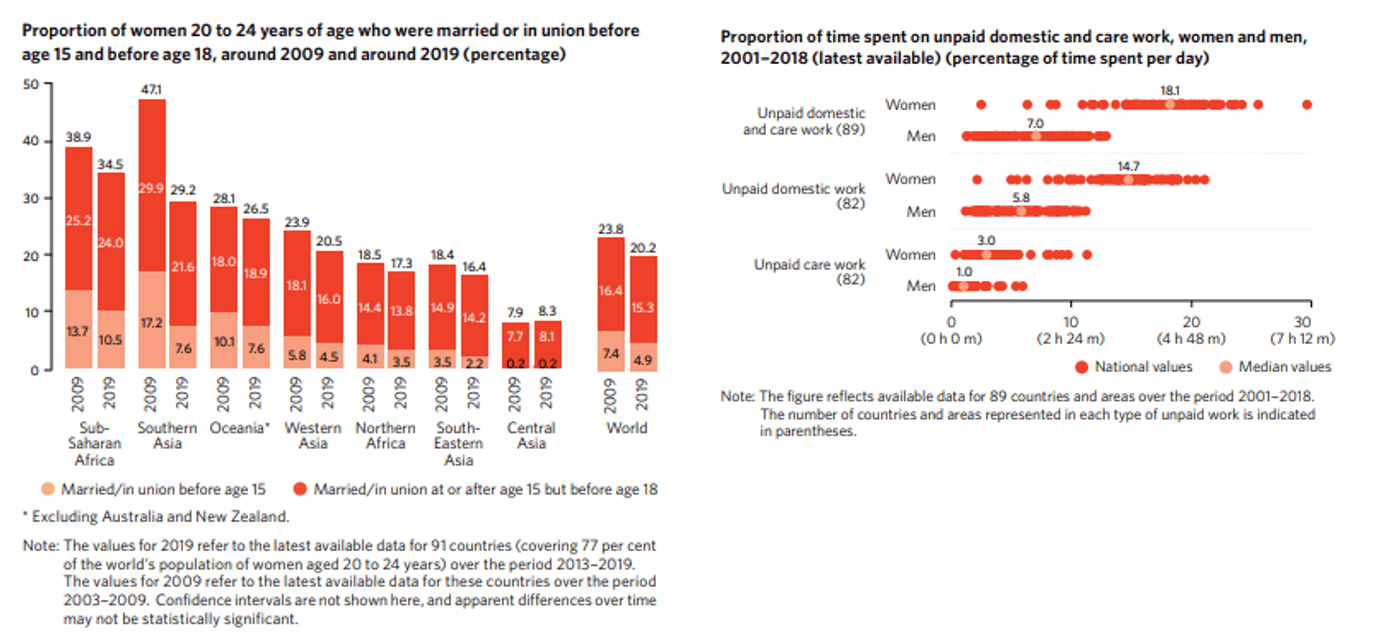
Figure 1: Statistics on child marriage and unpaid work prior to the pandemic. (Source: The Sustainable Development Goals 2020 Report)
The pandemic has also increased domestic violence, with data showing a rise in reports of abuse due to lockdown measures.
Employment Equality
When it comes to employment, in both emerging and mature economies, work patterns remain gender-specific (Figure 2). Female workers are 19% more likely to be at risk than male workers.
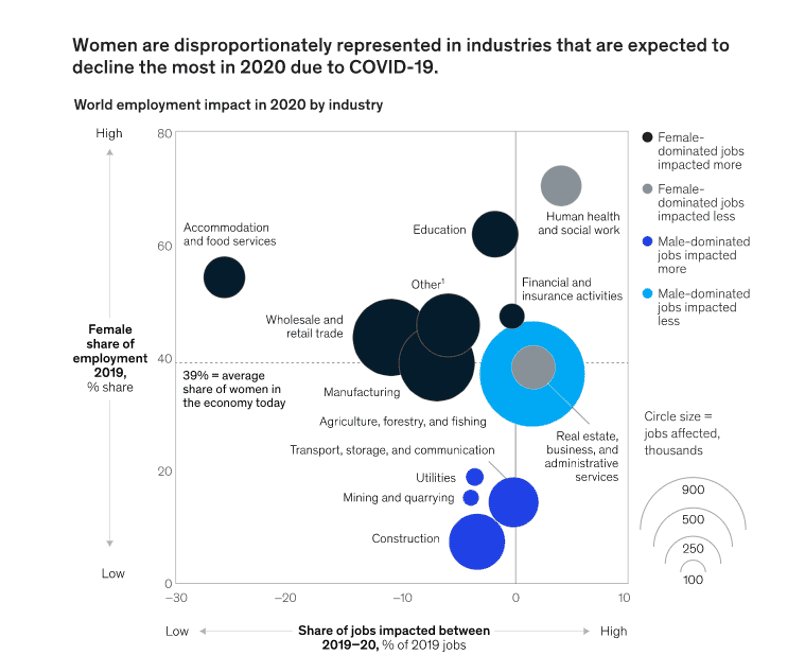
Figure 2: Examples of female and male work clusters, showing that employment is gender-specific. (Source: McKinsey )
The gender pay gap currently stands at 23% globally. Without targeted action, it will take 68 years to achieve equal pay. The World Economic Forum estimates that at the current rate, gender parity will take 217 years to achieve in workforce and politics. Urgent action is needed—$12 trillion could be added to global GDP by 2025 if gender equality is promoted.
Gender inequality is not just a moral and social issue—it is also a critical economic challenge.
Source: McKinsey
The Future is in Responsible Tech
One of the key pathways to gender equality is through technology. Encouraging women to enter STEM fields and This is bold(leveraging tech solutions to solve gender inequalities<----) are crucial. A more diverse workforce is more creative, innovative, and delivers higher profitability (McKinsey)
For every 100 men in leadership positions, there are just 37 women.
Source: McKinsey
The Tech2Impact Members that #ChooseToChallenge
Among tech2impact’s ecosystem, several startups are tackling gender biases and inequalities through innovative solutions:
ETIQ AI
ETIQ AI develops software to detect algorithmic biases, helping to prevent gender-based discrimination in hiring, finance, and healthcare decisions.
Develop Diverse
Develop Diverse provides AI-driven software to eliminate biased language in recruitment, promoting inclusivity and diversity.
Metta Space
Metta Space offers a B2B platform that helps companies prevent and handle sexual harassment cases effectively.
Salvatio Push
Salvatio Push has created a wearable device that alerts trusted contacts in dangerous situations, enhancing women’s safety.
Bridge Gap Renewables Inc.
Bridge Gap Renewables provides off-grid electricity to rural communities, closing the digital gap and enabling women’s access to education and business opportunities.
Concluding Remarks
Tech alone won’t fix gender inequalities, but thoughtful, systemic solutions will. This is a link The Good Tech Lab emphasizes systems thinking, urging us to consider root causes, leverage points, and unintended consequences.
"Think in systems—and data. Wicked problems resist any reductionist solution. Addressing them requires understanding system dependencies, differentiating effects from root causes, prioritizing the best leverage points on which to intervene, and anticipating unintended consequences."
💡 Explore more impactful tech ventures through the tech2impact Impact Tech Radar.
If your startup aligns with our mission, join our hub and be part of our movement! 🚀
Where to Find Out More...
In reality, we all suffer from biases, which require further introspection. Often these are biases that we are not entirely aware of, also labeled as “implicit biases.” For example, we unconsciously have preconceived notions or attitudes towards people, which in turn creates harmful stereotypes. If you’re interested in uncovering these biases, try the following:
Challenge yourself by taking The Harvard Implicit Association Test. The test not only uncovers implicit associations related to gender but also further topics such as race.
Explore gender mainstreaming approaches via This is a link The European Institute for Gender Equality. Gender mainstreaming is a useful approach to tackling gender inequality and can be applied to any given context.